

Researching and Understanding the Liens, Mortgages & Judgments on Tax Deed Properties
When someone files a lien against a person or their property, or if there is a Mortgage or HOA Fees, the county assigns the document either a “Book and Page #” or an “Instrument #”. This tells you where to locate the actual document in their Official Records.
The counties will format the Book and Page Numbers in different ways, such as
- Book 4156, Page 212
- Official Records number 4156, Page 212
- 4156-212
- 4156/212
If they use an Instrument Number instead, it’s simply a string of numbers with no dashes etc., such as 856541859.
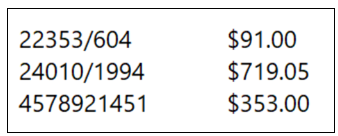
Note: If you are using our services where we provide the lien research, in our reports, we only put the number, never the words “Book and Page” or “Instrument”. Here is an example of 3 liens on a record and their amounts.
OFFICIAL RECORDS WEBSITE
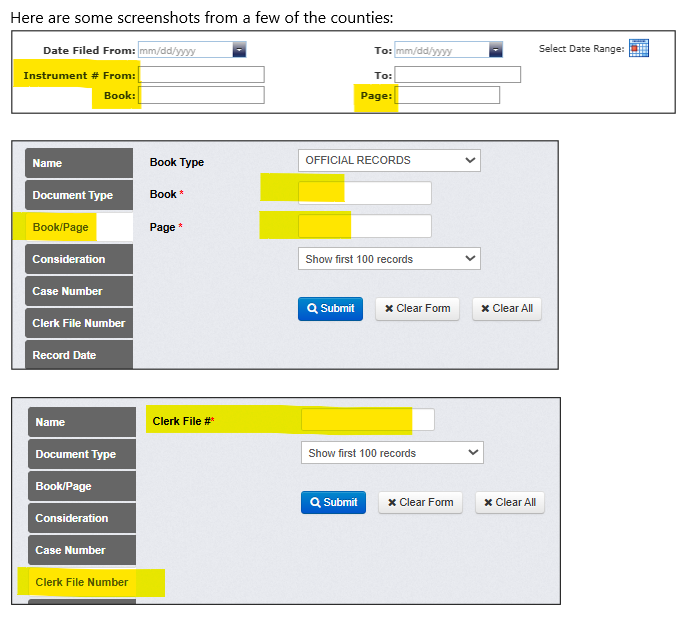
 Each county has their own Official Records website and they all look different, but the process is still the same. Go to the website, look for where you enter in the document number you have. You would choose either the Book and Page Number or the Instrument Number (which is sometimes called the Clerk File Number)

LIEN DESCRIPTIONS
- GOVERNMENTAL LIENS
- City or County Lien w/ set amount
- City or County on-going amount
- State Lien
- Federal Lien
- JUDGMENT / FINAL JUDGMENT
- MORTGAGE (MTG)
- Assignment of Mortgage (AOM)
- Mortgage Modification (MOD)
- HOA, POA, COA
- Home Owners Association
- Property Owners Association
- Condominium Association
City or County Lien w/ set amount (GOVERNMENT)
The document will show you a set amount/fine that is owed. E.g. $352.15

City or County, on–going amount (GOVERNMENT)
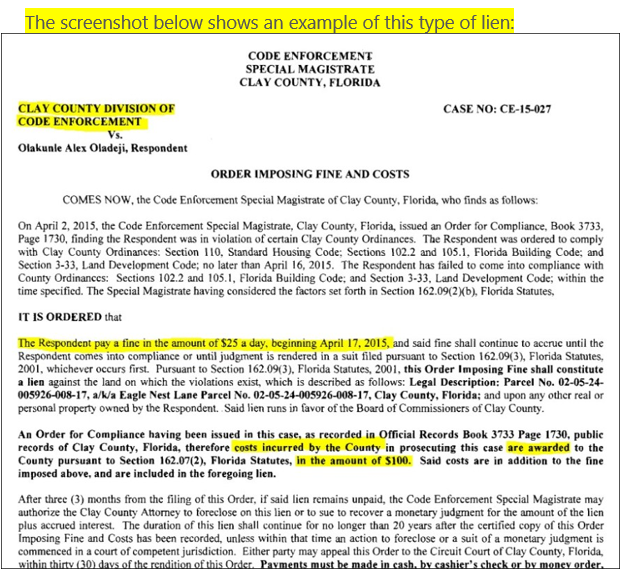
This is typically a code violation (Un-mowed yards, Outside debris, Overgrown Trees/Bushes, etc.). The document was sent to the property owner as a warning. “If you do not correct the violations before this date, you will be fine $250/day until it is corrected.”. However, there are typically NO updates as to if this was ever paid or if the violation was corrected. With this type of document, you must call the county department responsible for the violation and ask for any amount owed.
State Lien (GOVERNMENT)
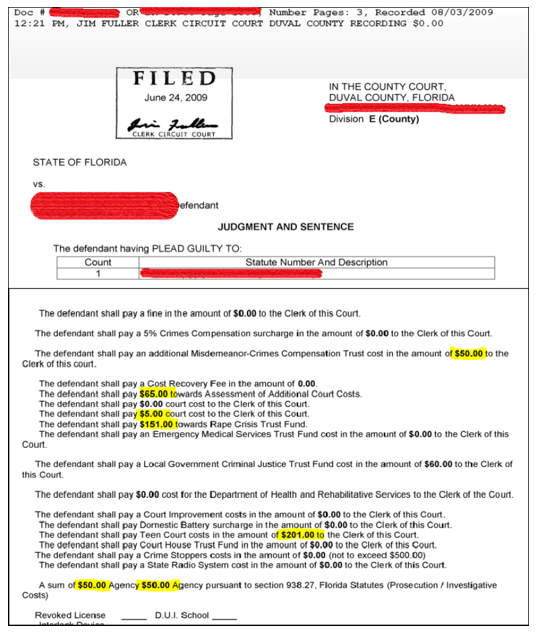
A lien owed to the State. These liens are typically costs associated with court costs, child support, alimony or State Income Taxes. Please note, documents relating to child support, alimony or probate are typically not shown online.
In the following screenshots, you see that you have to add up the amounts of ‘costs’ charged to the person. This is a lien based on an arrest and court costs:
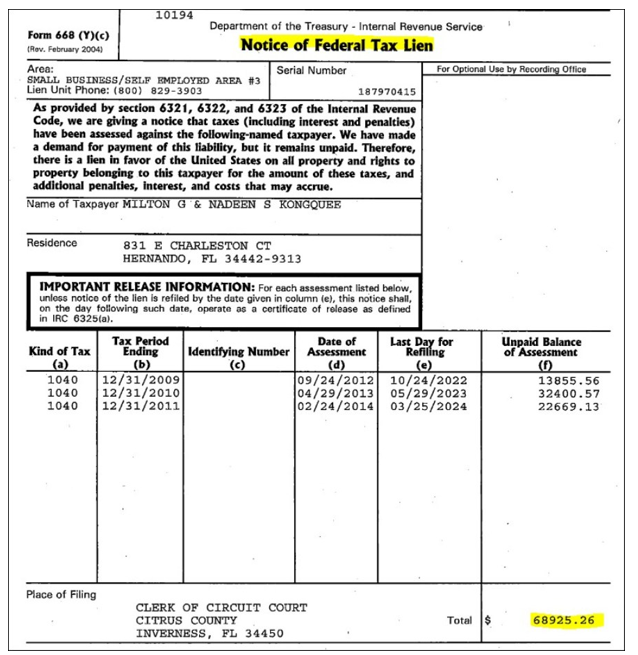
Federal Lien (GOVERNMENT)
A lien owed to the U.S. is typically an IRS Tax Lien. In the screenshot below, we highlighted the total amount due. Federal Liens NEVER expire as far as their ability to claim tax deed surplus. If a record has a federal lien on it, you should probably skip it. Even if it is for less than the surplus amount, you will be unable to claim surplus until AFTER the IRS makes their claim, which they fail to do so most of the time.
Judgment/Final Judgment
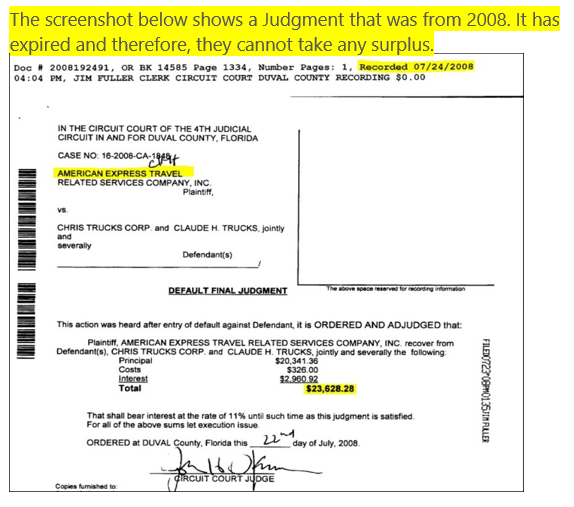
A Judgment is owed to any person or business who has sued (and won) the property owner. Important Note about Judgments in Florida. They expire 10 years after the date of filing (Recording Date). Therefore, if we see a Judgment on a Tax Deed Surplus record, we check the filing date. We find them expired a LOT. If they are expired, they cannot take any of the surplus money. The judgment holder is still notified of surplus and they may put in a claim but it will be (should be) denied.
However, if the Judgments are still good, you can also go after the Judgment Holder and help them make a claim on the surplus before the deadline. Therefore, during your research, if a Judgment is still good, make not of how much and to whom it is owed. Better yet, download the actual Judgment document because it will be needed during the claim process.
Mortgage (MTG), Assignment of Mortgage (AOM), Mortgage Modification (MOD)
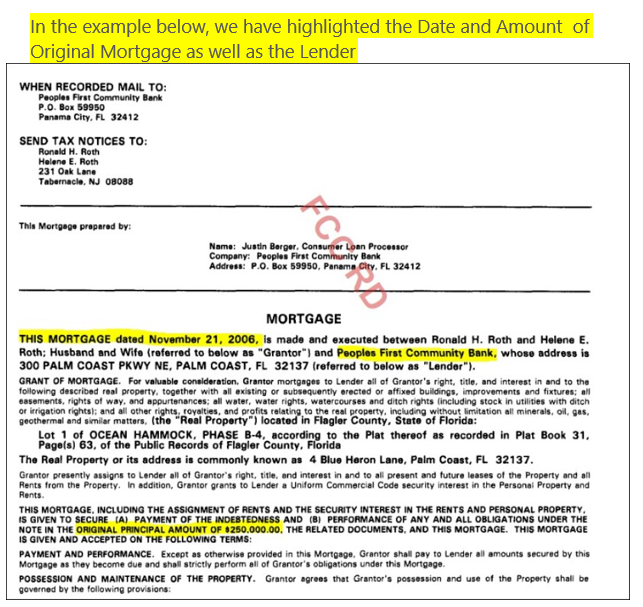
If there is a mortgage on a property, check the original date and amount. Although a lender has priority over a previous owner when it comes to claiming tax deed surplus, the amount of mortgage may be (by now) low enough to where there will still be surplus left over for the property owner.
Also, in Florida, as with all lien holders, the lender has only 120 days after the date the county mails the surplus letter to put in a claim, or else they are forever barred from doing so. We see this a LOT where the mortgage holder fails to put in a claim, so do not let Mortgages dissuade you from putting in a claim.
If there is an Assignment of Mortgage, THEY are the ones who can claim surplus and not the original Mortgage Lender.
HOA, POA, COA
Liens owed to Home, Property or Condo Owners Associations for fees or Property clean-up.
It is very important to note that unlike mortgages and judgments, HOAs do not need to have their lien filed prior to the auction date. Therefore, there may be HOA liens you are unaware of. This doesn’t mean they just automatically get the surplus money, they still have to put in a claim like everyone else. Sometimes they do, sometimes they do not.
